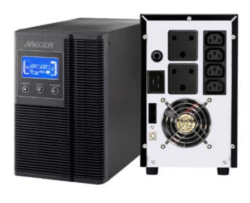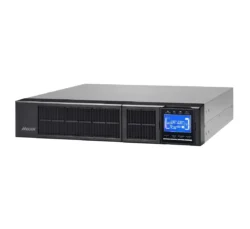
UPS Sizing Calculation - Simple Guide

UPS sizing involves calculating your total power load (in Watts or VA), adding a 20-25% buffer for growth/spikes, and ensuring the UPS capacity (VA/kVA) comfortably exceeds this, while also considering desired runtime by matching battery capacity to load and efficiency, factoring in power factors (like lagging/leading) and potential harmonic distortion for accuracy. Key steps: list devices, sum their Watts/VA, add margin (20-25%), and match to UPS VA, then check runtime.

Simple Example

  • Devices: PC (200W), Monitor (50W), Router (20W) = 270W total.
  • Margin: 270W + 20% = 324W.
  • UPS Choice: A 400VA/240W or 600VA/360W UPS would provide a safe buffer and good runtime for these small devices
  1. Calculate Your Load

  • List Devices: Make a comprehensive list of everything you’ll connect (computers, monitors, routers, etc.).
  • Find Wattage/VA: Check labels for each device’s power rating (Watts or VA).
  • Sum Total: Add all these numbers to get your Total Load (Watts).
  1. Determine Required Capacity (VA)

  • Add a Safety Margin: Increase your total wattage by 20-25% to handle power spikes and future growth (e.g., 2000W + 400W (20%) = 2400W).
  • Factor in Power Factor: UPS capacity is in VA, which relates to Watts (Watts = VA x Power Factor). For IT loads (computers), power factors are often around 0.6-0.8, meaning your VA needed will be higher than your Wattage.
  • Select UPS: Choose a UPS with a VA rating significantly higher than your total calculated load (e.g., 2400W load might need a 3000VA or 3kVA UPS).
  1. Understand Runtime

  • Runtime is Key: This is how long the UPS runs during an outage, determined by battery size and load.
  • Load Impact: The more devices you connect (higher load), the less runtime you get.
  • Battery Sizing: For longer runtimes or larger systems, batteries are added. Calculations involve UPS efficiency, battery voltage, Amp-hours (AH), and desired minutes of backup.
  1. Consider Advanced Factors

  • Harmonic Distortion: Non-linear loads (like power supplies in computers) create distortion, requiring higher VA ratings or specialized UPS designs.
  • Load Type: Leading (capacitive) or lagging (inductive) power factors from equipment like motors or VFDs affect UPS stability and may require oversizing.

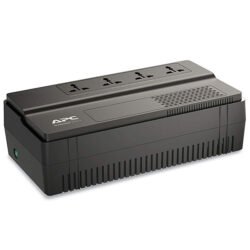
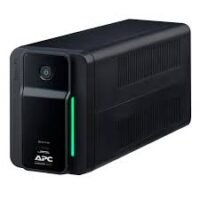
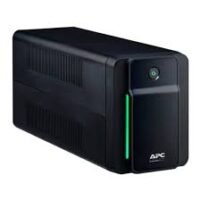
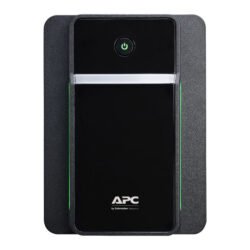
APC UPS

(1) KSh9,500.00 Ex.VAT
-11%
Original price was: KSh13,000.00.Current price is: KSh11,600.00. Ex.VAT
-7%
Original price was: KSh14,500.00.Current price is: KSh13,450.00. Ex.VAT
-17%
Original price was: KSh17,000.00.Current price is: KSh14,100.00. Ex.VAT
-8%
Original price was: KSh33,000.00.Current price is: KSh30,500.00. Ex.VAT

MECER UPS

-7%
Original price was: KSh8,500.00.Current price is: KSh7,930.00. Ex.VAT
-13%
Original price was: KSh14,000.00.Current price is: KSh12,200.00. Ex.VAT
-11%
Original price was: KSh20,500.00.Current price is: KSh18,300.00. Ex.VAT
-7%
Original price was: KSh29,500.00.Current price is: KSh27,450.00. Ex.VAT
-11%
Original price was: KSh46,500.00.Current price is: KSh41,480.00. Ex.VAT
-6%
Original price was: KSh65,000.00.Current price is: KSh61,000.00. Ex.VAT

SECUREYE UPS

-8%
Original price was: KSh6,000.00.Current price is: KSh5,500.00. Ex.VAT
-35%
Original price was: KSh16,500.00.Current price is: KSh10,700.00. Ex.VAT
-8%

Secureye UPS

Secureye UPS 1KVA

Original price was: KSh12,000.00.Current price is: KSh11,000.00. Ex.VAT
-5%

Secureye UPS

Secureye UPS 2KVA

Original price was: KSh19,000.00.Current price is: KSh18,000.00. Ex.VAT
-18%
Original price was: KSh26,000.00.Current price is: KSh21,350.00. Ex.VAT