
UPS Sizing Calculator
The goal is to calculate the required VA rating for the UPS and the necessary Ampere-Hour (Ah) for the battery to achieve your desired backup time.
Step 1: Calculate Your Total Power Consumption (Watts)
First, list all the devices you want the UPS to power and find their wattage (W). Use the nameplate on the device or the average wattages provided below.
| Appliance (Common in Kenya) | Average Wattage (W) | Quantity | Total Wattage (W) |
| Desktop Computer (Tower/CPU) | 100W – 250W | (Input) | (W) |
| Laptop Computer (Running/Charging) | 40W – 120W | (Input) | (W) |
| LCD/LED Monitor (24″-32″) | 30W – 60W | (Input) | (W) |
| Wi-Fi Router/Modem | 5W – 15W | (Input) | (W) |
| CCTV DVR/NVR + 4 Cameras | 50W – 100W | (Input) | (W) |
| Inkjet/Laser Printer (Idle/Standby) | 20W – 50W | (Input) | (W) |
| LED Light Bulb (7W-10W) | 8W | (Input) | (W) |
| Small Pedestal/Table Fan | 50W – 70W | (Input) | (W) |
| *Other Appliance 1* | (Input) | (Input) | (W) |
| *Other Appliance 2* | (Input) | (Input) | (W) |
| Total Connected Wattage (PW) | (Sum of all ‘Total Wattage’ columns) |
Note: For appliances with high initial surge current, like refrigerators, heaters, or large laser printers, use an inverter or a high-capacity online UPS (3KVA+) and consult an electrician. This calculator is primarily for electronics.
UPS Sizing Calculator (VA/kVA)
Determine the minimum VA rating for your UPS.
Sum of all powered devices (e.g., monitor, PC, server).
Typical range is 0.6 to 0.8 for computer equipment.
A 25% safety margin will be added to the result for future expansion.
Calculate UPS Size
Recommended UPS Rating
Recommended VA
Recommended kVA
Step 2: Calculate Required UPS Capacity (VA)
The UPS is rated in VA (Volt-Amperes), which is the apparent power. You must convert your total wattage (PW) to VA using the Power Factor (PF).
| Variable | Value/Formula | Calculation |
| Total Connected Wattage (PW) | (From Step 1) | (W) |
| Assumed Power Factor (PF) | 0.8 (Standard for most electronics/IT gear) | |
| Calculated Base VA (PVA_Base) | PW/PF | (W)/0.8=(VA) |
| Safety Buffer (20% to 30%) | ×1.25 (For a 25% buffer) | |
| Required UPS VA Rating (PVA_Req) | PVA_Base×1.25 | (VA)×1.25=(VA) |
The final PVA_Req is your recommended minimum UPS capacity. You should select the next standard commercial UPS size that is equal to or greater than this value.
| Recommended VA Range (Based on PVA_Req) | Recommended UPS Size (Standard Commercial Sizes) |
| PVA_Req≤600 VA | 650 VA |
| 600<PVA_Req≤800 VA | 850 VA |
| 800<PVA_Req≤1000 VA | 1000 VA (1 kVA) |
| 1000<PVA_Req≤1500 VA | 1500 VA (1.5 kVA) |
| 1500<PVA_Req≤2000 VA | 2000 VA (2 kVA) |
| 2000<PVA_Req | 3 kVA+ (Consider Online UPS for high loads) |
Step 3: Estimate Backup Runtime and Battery Capacity
UPS systems have built-in batteries, but for extended runtime, you need to calculate the Ampere-Hour (Ah) capacity required.
| Variable | Value/Formula | Calculation |
| Total Connected Wattage (PW) | (From Step 1) | (W) |
| Desired Backup Time (Th) | (Input in Hours, e.g., 0.25, 0.5, 1, 2) | (Hours) |
| Battery Voltage (VB) | 12 V (Common for small UPS. Check unit specs) | |
| Battery Efficiency (η) | ×0.9 (Approx. 90% efficiency) | |
| Required Battery Capacity (Ah) | PW×Th/(VB×η) | (W)×(H)/(12V×0.9)=(Ah) |
For a UPS with a single 12V internal battery, the calculated Ah is the capacity you need. If the UPS uses multiple batteries (e.g., in a 24V or 36V system), the total required Ah remains the same, but the Ah rating per battery will be less.
General Cost Estimate (Kenya Shillings)
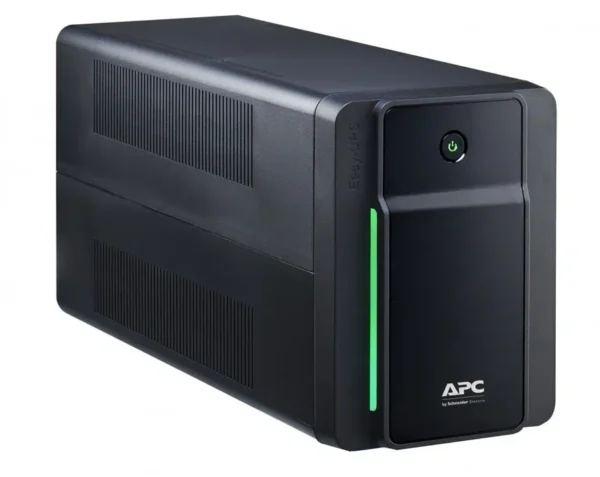
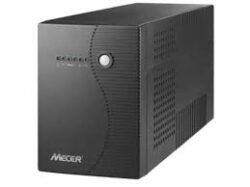
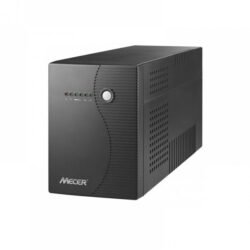
Prices vary based on brand (APC, Mercury, Mecer, etc.), technology (Line-Interactive or Online), and retailer. These are general estimates (KES, VAT Exclusive).
| Recommended UPS Capacity (VA) | Estimated Price Range (KES) | Best For |
| 650 VA | KES 5,000 – KES 14,000 | Router, Modem, Small Light, Desktop (15-20 mins) |
| 1000 VA (1 kVA) | KES 8,000 – KES 18,000 | 1 PC, Monitor, Router (20-30 mins) |
| 1500 VA (1.5 kVA) | KES 12,000 – KES 37,000 | 2 PCs, Monitors, Small Office Network |
| 2000 VA (2 kVA) | KES 18,000 – KES 60,000 | Multiple PCs/Workstations, Small Server |
| 3000 VA (3 kVA) | KES 35,000 – KES 150,000+ | Larger Servers, Critical Equipment (Often Online UPS) |
-
Key Power Standards in Kenya
When purchasing a UPS in Kenya, ensure it is rated for the local electrical standards:
- Standard Voltage:240V (Single Phase)
- Standard Frequency:50 Hz
- Plug Type:Type G (UK Standard) or Type C/F (European Standard) for some electronics. The UPS should have the appropriate output sockets or IEC outlets.
UPS Technology Comparison
For a stable power supply in Kenya, consider the UPS technology:
- Standby/Offline UPS:Most affordable. Provides basic protection and switches to battery only when power fails. Not ideal for sensitive electronics due to the switchover time.
- Line-Interactive UPS:Most common for home/small office in Kenya. It includes Automatic Voltage Regulation (AVR) to adjust for minor voltage fluctuations (sags and surges) without switching to the battery, which is common in Kenya’s grid.
- Online/Double-Conversion UPS:Best for mission-critical equipment (servers, medical devices). It constantly converts the incoming AC power to DC to charge the battery, and then back to clean AC power. This provides a perfect, zero-transfer-time sine wave output, offering the highest level of protection.